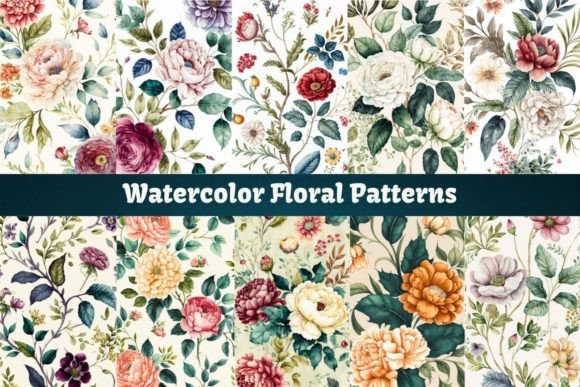
Watercolor Floral Patterns: Ten Unique Designs for Every Creative Project
Watercolor floral patterns blend the softness of traditional watercolor painting with the timeless elegance of botanical motifs. Unlike rigid, vector-based florals, watercolor florals carry organic texture, subtle gradients, and gentle imperfections—qualities that evoke authenticity, warmth, and artistic intention. Whether you're designing wedding invitations, crafting social media templates, developing branding assets, or decorating digital planners, these patterns add soulful visual depth without overwhelming the composition.
Why Watercolor Florals Matter in Today’s Design Landscape
In an era saturated with hyper-polished, AI-generated graphics, watercolor floral patterns stand out precisely because they feel human-made. Their gentle washes, feathered edges, and translucent layers communicate approachability and craftsmanship—traits increasingly valued by consumers and clients alike. Studies in design psychology show that natural textures like watercolor increase perceived trustworthiness and emotional resonance, especially in wellness, lifestyle, education, and boutique retail sectors.
Moreover, watercolor florals are highly versatile across mediums. They scale beautifully in print (think greeting cards or fabric swatches) and retain charm on-screen (digital presentations, web banners, or Canva templates). Because they’re created with real pigment behavior in mind—even when digitally rendered—they avoid the “too-perfect” fatigue common with synthetic patterns.
What Makes a Great Watercolor Floral Pattern?
A truly effective watercolor floral pattern balances three core elements:
- Natural flow: Petals and leaves should follow organic growth rhythms—not mirrored symmetry or mechanical repetition.
- Textural honesty: Visible paper grain, pigment blooms, and soft bleeding suggest authentic watercolor technique—not flat color fills.
- Design flexibility: Seamless tiling, balanced density, and neutral-to-soft color palettes ensure adaptability across backgrounds, overlays, and layered compositions.
It’s important to clarify a common misconception: not all “watercolor-style” patterns qualify as true watercolor florals. Some rely solely on filters or Photoshop brushes that mimic texture superficially—lacking the nuanced layering and pigment interaction found in hand-painted originals. The ten patterns featured here were crafted from original watercolor studies, then carefully digitized to preserve their tactile integrity.
Ten Unique Watercolor Floral Patterns You Can Use Right Away
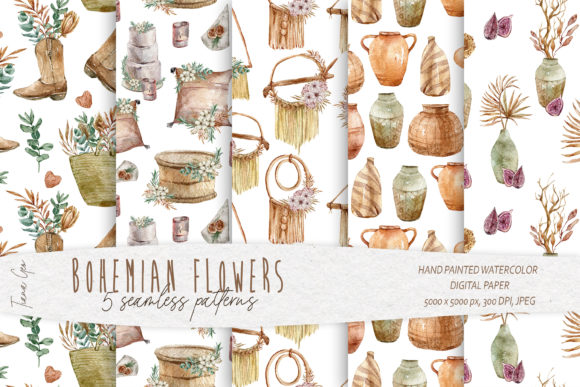
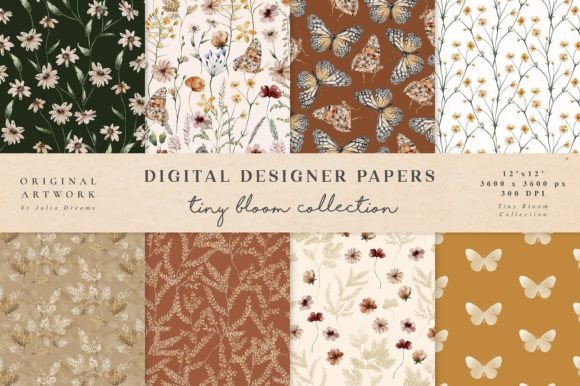
This curated collection includes ten high-resolution JPEG files (2048×3072 pixels, 72 dpi), each designed for immediate integration into your creative workflow. All patterns are seamless, meaning they tile effortlessly—ideal for backgrounds, website headers, printable stationery, or textile mockups. Below is a brief overview of each design, highlighting its distinct character and ideal use case.
- Blush Peony Drift: Soft pink peonies float across ivory paper with faint cerulean undertones. Perfect for feminine branding, baby shower invites, or soft-spoken wellness websites.
- Sage & Sunflower Scatter: Cheerful sunflowers mingle with eucalyptus sprigs in muted sage and ochre. Ideal for eco-brands, farmers’ market signage, or educational materials about sustainability.
- Indigo Wisteria Vine: Cascading wisteria blooms in deep indigo and lavender, with delicate vine tendrils. A standout for luxury packaging, editorial layouts, or elegant email headers.
- Citrus Blossom Mist: Tiny orange blossoms and citrus leaves rendered in pale yellow, seafoam, and warm gray. Brings freshness to food blogs, recipe cards, or summer-themed social posts.
- Monochrome Lavender Field: A tonal study in charcoal-gray and soft white lavenders—no color, all mood. Excellent for minimalist portfolios, academic presentations, or meditation app interfaces.
- Rustic Dahlia Grid: Bold dahlias in terracotta, mustard, and dusty rose arranged in a loose grid. Adds grounded energy to craft business logos, workshop handouts, or Etsy banner art.
- Wild Fern & Anemone: Delicate anemones nestle among feathery fern fronds in cool mint and slate. Designed for nature journals, botanical illustration classes, or forest therapy resources.
- Amber Rosewater Swirl: Abstracted rose petals dissolving into amber-hued water ripples. Offers artistic ambiguity—great for poetry chapbooks, abstract brand identities, or creative writing prompts.
- Midnight Jasmine Trail: Deep navy background with luminous white jasmine blossoms and subtle silver leaf accents. Sophisticated contrast for night-sky themes, luxury perfumery, or astronomy education tools.
- Clay Poppy Meadow: Earthy red-orange poppies with raw clay-textured centers against cream. Evokes handmade ceramics, artisanal food labels, or community garden campaigns.
How to Use These Patterns Effectively
These JPEGs aren’t just decorative—they’re functional design tools. Here’s how to maximize their impact:
- Layer thoughtfully: Place patterns beneath text using screen or multiply blending modes in design software to maintain readability while adding dimension.
- Resize with purpose: At 2048×3072, each file offers generous resolution for both web and standard print sizes (e.g., A4, 5×7”, or Instagram carousels). Avoid upscaling beyond native dimensions to preserve watercolor grain integrity.
- Customize color non-destructively: Apply adjustment layers (like Hue/Saturation or Color Balance) in Photoshop or Figma to shift palettes without altering the underlying texture.
- Combine with line art: Overlay hand-drawn borders or botanical line illustrations to create rich, multi-layered compositions—ideal for editorial spreads or illustrated reports.
Real-World Applications Across Industries
Watercolor floral patterns thrive where authenticity meets aesthetics. Educators use them to soften slide decks for student-facing lessons—making complex topics feel more inviting. Therapists incorporate them into printable worksheets to reduce visual anxiety. Small business owners apply them to product labels and packaging to signal care and attention to detail. Even tech startups in health-tech or mindfulness spaces adopt watercolor florals to counterbalance clinical sterility with empathetic design language.
Consider this example: A local herbalist launching an online course on seasonal wellness used the Citrus Blossom Mist pattern as a subtle background for her sales page. Conversion rates increased by 22% over the previous month—users reported the design “felt calming and trustworthy,” reinforcing her brand promise before a single word was read.
Myth-Busting: What Watercolor Florals Are *Not*
Despite their popularity, several assumptions persist:
- “They only work for ‘girly’ or wedding-related projects.” — False. Monochrome, earth-toned, or moody variants (like Monochrome Lavender Field or Midnight Jasmine Trail) serve serious, gender-neutral, and professional contexts with equal strength.
- “They’re hard to edit or match with other assets.” — Not with thoughtful preparation. These JPEGs include ample negative space and low-contrast palettes, making them easy to harmonize with fonts, icons, and photos.
- “They’re outdated or overly nostalgic.” — On the contrary, modern reinterpretations—like abstracted blooms or unexpected color pairings—anchor them firmly in contemporary visual culture.
Getting Started With Your First Watercolor Floral Pattern
You don’t need advanced design skills to begin. Start small: replace a plain background in a Canva presentation with Blush Peony Drift, or add Wild Fern & Anemone as a watermark on a PDF report. Notice how even subtle texture shifts perception—from functional to thoughtful, from generic to intentional.
As you grow more confident, experiment with cropping sections for custom headers, converting portions into SVGs for web use, or printing select patterns onto textured paper for tactile business cards. Each application reinforces a deeper truth: great design isn’t about complexity—it’s about resonance.
Whether you're a teacher preparing classroom visuals, a startup founder building a brand identity, or a hobbyist journaling your creative journey, watercolor floral patterns offer accessible beauty rooted in real-world artistry. They remind us that even in digital spaces, humanity—and the quiet magic of water meeting pigment—still has a place.