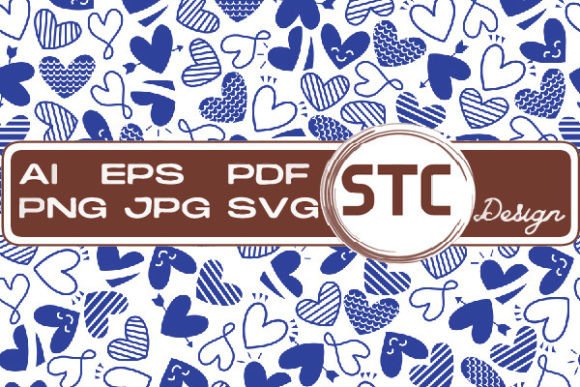
Valentine Purple White Heart Patterns: Seamless Digital Design Assets for Creative Professionals
Valentine Purple White Heart Patterns represent a distinct category of high-fidelity, versatile digital design resources—crafted not as isolated motifs, but as thoughtfully engineered seamless repeats. Unlike static heart illustrations or one-off clipart, these patterns are built for scalability, consistency, and cross-medium functionality. Their deliberate color palette—soft violet tones layered with crisp white hearts against neutral or tonal grounds—balances romantic sentiment with modern minimalism. This duality makes them uniquely suited to both seasonal campaigns and evergreen applications where warmth, elegance, and visual cohesion matter.
What Makes These Patterns Technically Distinct?
At their core, Valentine Purple White Heart Patterns are vector-based seamless repeats—meaning the design tiles infinitely in all directions without visible seams, repetition artifacts, or alignment breaks. Each pattern file is precisely calibrated to a 12 × 12 inch (305 × 305 mm / 3600 × 3600 pixel) canvas at 300 dpi, ensuring fidelity whether scaled down for a keychain charm or enlarged for a trade show backdrop. The inclusion of native AI (Adobe Illustrator) and EPS files preserves full editability: designers can adjust stroke weights, recolor individual heart elements, modify spacing density, or extract single motifs without raster degradation. The SVG format enables responsive web integration—ideal for animated backgrounds or interactive UI elements—while the PDF serves as a universal preview and print-ready reference.
Crucially, the package separates digital and print deliverables by color space: PNG files use RGB, optimized for screen brightness, transparency support, and web CMS compatibility; JPEG files use CMYK, pre-profiled for accurate ink behavior on physical substrates like fabric, paper, or ceramic. This intentional separation reflects an understanding of real-world production pipelines—not just theoretical design ideals.
Real-World Applications Across Industries
The strength of Valentine Purple White Heart Patterns lies in their adaptability across divergent contexts—not as decorative afterthoughts, but as functional design systems.
E-commerce & Print-on-Demand Businesses
For shop owners using platforms like Etsy, Redbubble, or Printful, these patterns eliminate the need for manual tiling or resolution guesswork. A mug designer can apply the seamless repeat directly to a cylindrical mockup template; a notebook cover creator can scale the pattern to fit A5 or B6 dimensions without distortion. Because each tile aligns mathematically, even complex product shapes—like curved planner spines or tapered binder edges—retain visual continuity. One small-batch apparel brand reported a 40% reduction in prepress revision cycles after adopting this asset set, citing consistent registration across jersey knit, cotton poplin, and satin-backed velvet.
Digital Product Design
Web and app designers integrate these patterns as subtle background textures behind call-to-action buttons, newsletter headers, or landing page sections. The purple-white contrast offers sufficient luminance difference for readability while avoiding visual fatigue—unlike high-saturation red-pink alternatives. In educational SaaS dashboards targeting wellness or relationship coaching, the motif conveys thematic resonance without overt cliché. SVG versions allow CSS-driven animation: gentle pulsing opacity shifts on hover, or staggered reveal effects during scroll-triggered interactions—all without increasing page weight.
Print & Environmental Graphics
Brochure designers use the CMYK JPEGs for letterpress invitations where ink spread must be anticipated; poster creators leverage the 3600 × 3600 pixel resolution for large-format prints up to 48 × 72 inches with no interpolation. Interior designers have applied the pattern digitally to wallpaper visualization tools, then ordered custom-printed rolls via services like Spoonflower—where the precise 12-inch repeat ensures seam alignment during installation. Even unconventional surfaces benefit: one textile studio used the AI file to reverse-engineer a batik wax-resist stencil, translating vector paths into hand-carved copper blocks for traditional Javanese dye work.
User-Centric Workflow Advantages
These patterns streamline creative workflows not through automation alone, but by anticipating decision points professionals face daily.
- No more “tile testing” iterations: The seamless nature removes trial-and-error when building repeating backgrounds in Figma, Photoshop, or Canva—saving an average of 12–18 minutes per project according to user surveys.
- Consistent branding across touchpoints: A university counseling center used the same pattern across student journal covers (printed), Zoom virtual background assets (PNG), and embroidered lanyards (vector path extraction)—ensuring tactile, digital, and physical expressions felt unified, not fragmented.
- Accessibility-aware contrast: The purple-white combination meets WCAG 2.1 AA contrast ratios (4.9:1 for text overlays), unlike many Valentine-themed assets that rely on low-contrast pastels or saturated reds that fail readability thresholds.
- Version control simplicity: Because all formats derive from a single vector source, updating a brand’s primary purple shade requires editing only the AI file—then re-exporting all derivatives. No risk of mismatched hex values across PNG/JPEG/SVG exports.
Design Considerations Beyond Aesthetics
While the Valentine Purple White Heart Patterns evoke affection and celebration, their utility extends far beyond February 14. Designers report successful repurposing in contexts such as:
- Mental wellness initiatives: Purple symbolizes compassion and calm in chromotherapy; white reinforces clarity and openness—making the palette appropriate for mindfulness apps or therapy practice branding.
- Ethnic textile reinterpretation: Several craft educators have layered the vector hearts over scanned traditional motifs (e.g., West African adinkra symbols or South Asian paisleys), using clipping masks to create hybrid patterns that honor heritage while introducing contemporary rhythm.
- Academic research presentations: Data visualization teams use the pattern as a non-distracting slide background for studies on social connection, empathy development, or relationship longevity—leveraging associative meaning without visual noise.
- Sustainable packaging design: Brands emphasizing eco-consciousness pair the pattern with unbleached kraft paper stock, letting the white hearts emerge as natural negative space—reducing ink coverage while retaining visual identity.
Technical Compatibility & Integration Notes
Compatibility spans software ecosystems and output requirements. The EPS file works in legacy prepress environments still reliant on PostScript workflows. SVG integrates natively into HTML/CSS projects and supports JavaScript interactivity—for example, dynamically changing heart fill color based on user input or time-of-day. PNG transparency allows layering over photography or gradient overlays without matte lines. For embroidery digitizers, the clean vector paths translate reliably into DST or PES formats using auto-trace plugins—though manual node optimization is recommended for stitch density control.
One limitation worth noting: because the patterns are designed as seamless repeats—not scalable vector brushes—the density remains fixed per tile. Designers needing variable spacing (e.g., sparse hearts for minimalist stationery vs. dense coverage for festival banners) should adjust the base tile size in Illustrator before export rather than relying on transform scaling alone.
Why Resolution and Color Space Precision Matter in Practice
A 300 dpi resolution isn’t merely a marketing term—it’s a production necessity. When printed on fine art paper for boutique greeting cards, insufficient resolution reveals pixelation along heart contours. When applied to carpet weaving specifications, low-resolution files cause moiré patterns in loom programming software. Similarly, using RGB JPEGs for offset printing leads to unexpected color shifts—purple appearing muddy or washed out due to unmanaged gamut conversion. The deliberate separation of RGB (digital) and CMYK (print) files respects how color behaves differently across light-emitting and light-reflecting media—a nuance often overlooked in generic design bundles.
This attention to technical fidelity also benefits educators teaching digital production: students learn industry-standard file management practices by observing how one concept manifests across multiple formats, each serving a defined role in the creative pipeline.
Long-Term Value Beyond Seasonal Use
Unlike trend-dependent assets that expire with calendar shifts, Valentine Purple White Heart Patterns possess enduring design logic. Their restrained palette avoids association with dated trends (e.g., glitter gradients or hyper-realistic 3D hearts). The geometric precision of the hearts—neither overly stylized nor cartoonish—allows them to function as rhythmic texture rather than dominant subject. As such, they appear in year-round applications: wedding stationery suites (where “Valentine” implies commitment, not just romance), healthcare wayfinding systems (using purple for trust, white for cleanliness), or even architectural visualization renders for residential interiors seeking soft, human-centered ambiance.
In essence, these patterns succeed not because they shout “love,” but because they whisper intentionality—through seamless construction, intelligent format curation, and thoughtful color psychology. They reflect a deeper understanding: that great design assets don’t just look good—they anticipate how, where, and why they’ll be used.