Shibori Watercolor Patterns
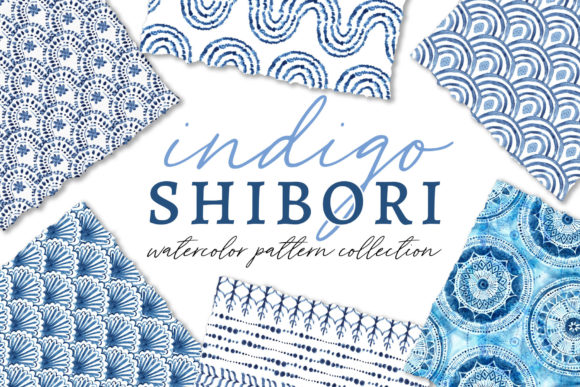
Shibori Watercolor Patterns bring the ancient Japanese art of shibori—traditionally tied to indigo-dyed textiles—into the modern digital creative space. But instead of fabric and dye vats, you get six hand-painted, seamless watercolour patterns that capture the organic flow, soft edges, and subtle variations of real indigo shibori. Each design is crafted with care: gentle blooms, feathery resist marks, and delicate tonal shifts that feel both earthy and elevated.
These aren’t generated by AI or traced from photos. They’re painted by hand using real watercolours, then digitally refined to ensure perfect seamlessness—so they tile effortlessly across any surface without visible repeats or hard edges. The result? A collection that feels authentically ethnic, quietly boho, and deeply tactile—even on screen.
Why these patterns stand out in a crowded design world
Most digital pattern sets fall into one of two camps: overly rigid vector repeats or flat, repetitive scans. Shibori Watercolor Patterns bridges that gap. Because they’re painted first, then scanned and edited at 300dpi, they retain natural texture—the faint granulation of pigment, the soft halo where colour bleeds, the slight irregularity that makes handmade work feel alive.
This matters whether you're designing a yoga studio’s new website, printing fabric for a small-batch clothing line, or creating social media templates for a wellness brand. That subtle authenticity builds trust. Viewers may not know *why* a background feels calming or grounded—but they’ll feel it. And in visual communication, feeling often leads to connection.
Real ways people are using this collection
Here’s how creators across different roles are putting these patterns to work—without needing advanced design skills:
- Bloggers & content creators use them as textured backgrounds for Pinterest pins, Instagram story overlays, or newsletter headers—adding warmth without distracting from text.
- Small business owners apply them to product labels, packaging mockups, or Shopify banners—giving handmade soap, ceramics, or herbal teas a cohesive, artisanal look.
- Educators & workshop leaders incorporate them into printable worksheets, course slides, or meditation journal covers—enhancing visual calm and cultural resonance.
- Fashion & textile designers scale and recolour them for digital fabric prints, scarf designs, or embroidery guides—using the indigo base as a starting point for custom palettes.
- Freelancers & marketers drop them into Canva, Adobe Photoshop, or Figma as ready-to-use assets—saving hours of building textures from scratch.
No special software is required. Each file is a high-resolution 4000 × 4000 px JPG—large enough to print on fabric, wallpaper, or large-format posters, yet easy to resize for web use. Because they’re seamless, you can repeat them infinitely in design tools without manual alignment or tiling tricks.
What makes the Indigo Shibori watercolour pattern collection special
The indigo focus isn’t just aesthetic—it’s intentional. Indigo carries centuries of meaning across cultures: protection, intuition, depth, quiet strength. These patterns echo that energy—not through symbolism, but through tone and texture. You’ll find deep navy gradients, soft sky-blue washes, and muted slate tones—all built from real indigo pigments, layered and lifted by hand.
And because each of the six patterns is distinct—some feature tight concentric circles reminiscent of kanoko (tie-dye), others suggest folded-resist lines like itajime, while a few lean into free-flowing marbling—you can mix and match within a single project. Try pairing a bold circular motif with a softer linear one for contrast in a mood board or presentation deck.
Things to keep in mind before using them
While these patterns are beginner-friendly, a few practical notes help you get the most out of them:
- They’re JPGs—not editable layers. You won’t find individual colour channels or vector paths. If you need to change hues, use adjustment layers in Photoshop or hue/saturation tools in free editors like Photopea or GIMP.
- Indigo tones vary by screen and printer. What looks rich and deep on your laptop may appear slightly cooler or lighter when printed. Always test a small swatch first—especially for physical products.
- Seamless doesn’t mean invisible. At very large scales (e.g., full-wall murals), subtle repetition *might* become noticeable. For those uses, consider rotating or layering two patterns at low opacity for extra depth.
- They’re licensed for commercial use. You can sell items featuring these patterns—like printed notebooks, tote bags, or digital planners—as long as you don’t resell or redistribute the files themselves.
Where to start if you're new to pattern-based design
You don’t need years of experience—or even a subscription to expensive software—to begin. Start simple:
- Open one pattern in any image editor or Canva, then drag it onto a blank canvas.
- Resize it to cover the background, then adjust opacity to 80–90% so text remains readable.
- Try adding a soft white or cream overlay shape (like a rounded rectangle) behind your headline—it creates instant hierarchy and keeps the pattern from overwhelming.
- For print projects, set your document to CMYK and 300dpi, then place the JPG at 100% scale to preserve quality.
That’s it. No tutorials needed. Just curiosity and a few minutes.
A thoughtful tool for meaningful making
At its core, Shibori Watercolor Patterns supports intention—not just decoration. Whether you're launching a mindful brand, teaching cultural crafts, or designing something personal like a wedding invitation suite, these patterns carry quiet narrative weight. They whisper tradition, patience, and natural rhythm—without saying a word.
They also respect your time. Instead of spending days trying to mimic watercolour texture with brushes and filters, you get six finished, field-tested options—each one designed to work well, look beautiful, and support your message rather than compete with it.
If you value craftsmanship, versatility, and calm visual language—and want design assets that grow with you, not limit you—this collection fits naturally into your toolkit. Not as a trend, but as a resource you’ll return to again and again.